Strategic Timber Usage
Sustainable sourcing isn't just about planting a tree for every one cut; it’s about managing the "biomass interest" of a forest without depleting the capital. In practice, this means identifying "wolf trees" that crowd out saplings or utilizing "dead-standing" timber that poses a fire risk.
For example, a professional woodlot manager in Vermont might target American Beech affected by bark disease, removing trees that would otherwise rot and release methane. By harvesting these specifically, you improve the health of the remaining stand while securing high-BTU fuel.
According to the U.S. Energy Information Administration (EIA), heating with wood can be carbon neutral if the growth rate of the forest exceeds the harvest rate. In well-managed private woodlots, one acre of hardwood can sustainably yield about 0.5 to 1 cord of wood annually forever.
Primary Sourcing Errors
Many novices mistake "fallen wood" for "good wood." Wood resting on the forest floor for more than six months often hosts fungi and insects that degrade the cellulose structure, stripping the log of its energy density. Burning this results in low heat and excessive smoke.
Another major issue is "green-burning." Attempting to combust wood with a moisture content (MC) above 25% forces the fire to spend energy boiling off water rather than heating your home. This leads to rapid creosote buildup in chimneys, a leading cause of residential structure fires.
The consequences are both economic and environmental. A homeowner burning unseasoned oak might lose 50% of the potential heat value, essentially throwing away every second log. Furthermore, the particulate matter (PM2.5) emissions from wet wood are significantly higher than those from properly seasoned fuel.
Optimizing the Process
Selecting Species by BTU Output
Density is the primary metric for fuel quality. Species like Shagbark Hickory or Black Locust provide approximately 27-30 million BTUs per cord, whereas White Pine offers only 14-16 million. Focus your harvesting efforts on dense hardwoods to reduce the volume of wood you need to handle and store by nearly half.
Precision Felling and Safety
Utilize the "open-face notch" technique for directional felling. This 70-90 degree notch allows the hinge to guide the tree longer, ensuring it lands exactly where intended. Professionals use tools like the Husqvarna 550 XP Mark II for its high power-to-weight ratio, ensuring clean cuts that promote stump sprouting in species like Red Maple.
The Physics of Fast Splitting
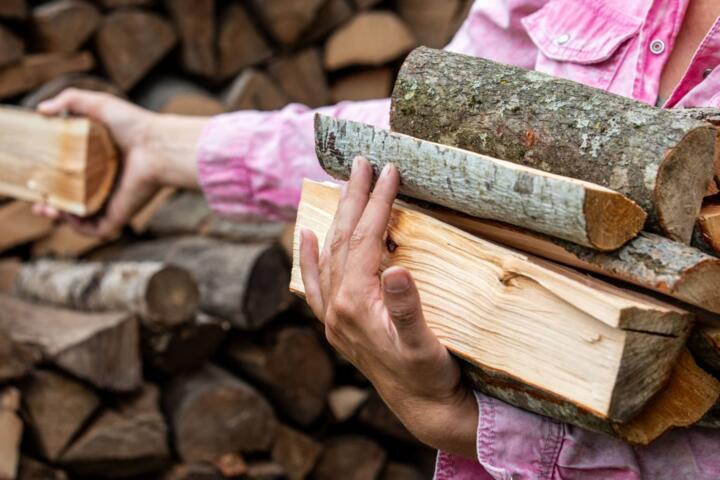
Split wood immediately after cutting while the sap is still "wet" (for most species). This exposes the internal grain to airflow. Aim for uniform sizes—typically 4 to 6 inches in diameter. Using a Fiskars X27 Super Splitting Axe allows for a one-strike split due to its geometric head design, reducing physical fatigue and increasing output per hour.
Stacking for Solar Dehydration
The "Holz Hausen" (round stack) or the classic "Single Row" are best. Ensure the stack is raised at least 6 inches off the ground using pallets to prevent moisture wicking. A study by the University of New Hampshire suggests that wood stacked in a single row facing south dries 30% faster than wood kept in large, multi-row piles.
Monitoring Internal Moisture Levels
Visual checks are unreliable. Use a digital pin-type moisture meter, such as the General Tools MMD4E. Split a fresh log and test the center; for optimal efficiency in modern EPA-certified stoves, you must reach 15-20% MC. This ensures a secondary combustion cycle where smoke gases are burned, increasing heat output by up to 30%.
Bio-Diversity Retention Tactics
Leave at least 2-3 "snags" (dead standing trees) per acre. These provide vital habitats for woodpeckers and owls that control pest populations. Sustainable sourcing involves a "thinning from below" approach, removing smaller, suppressed trees to allow the dominant canopy trees to reach their full carbon-sequestering potential.
Operational Case Studies
A small farm in Oregon transitioned from buying random "seasoned" loads to managing their 10-acre stand. They implemented a 3-year rotation cycle, felling only during winter when sap levels are lowest. By using a Logosol timber mill for off-cuts and a dedicated seasoning shed, they reduced their annual wood consumption from 7 cords to 4.5 cords while maintaining the same indoor temperature.
Another case involved a community cooperative in Maine. They switched from random scavenging to a "Timber Stand Improvement" (TSI) plan. Within two years, they documented a 15% increase in the growth rate of their premium sawtimber oaks because they removed competing "low-grade" species for firewood, effectively making their fuel a byproduct of forest improvement.
Fuel Prep Comparison
| Tool/Method | Best For | Efficiency Rating | Primary Benefit |
|---|---|---|---|
| Maul & Wedge | Knotted Elm/Oak | Low/Manual | Highest splitting force |
| Hydraulic Splitter | Large Volumes | Very High | Saves physical labor |
| Handheld Axe | Straight Hardwoods | Medium | Fast, portable, no fuel |
| Kiln Drying | Commercial Sale | Highest | Instant use, pest-free |
Avoiding Processing Traps
Avoid covering your entire woodpile with plastic tarps down to the ground. This traps ground moisture and creates a "greenhouse effect" that promotes mold. Instead, cover only the top 12 inches of the stack, leaving the sides open for wind to carry away evaporated water.
Don't ignore the "end-checking" signs. Small cracks at the end of logs mean drying has begun, but it doesn't mean the core is ready. Always do a fresh split test. Also, never source wood from "Tree Heaven" or unknown roadside dumps, as you risk bringing invasive species like the Emerald Ash Borer into your property.
FAQ
What is the best month to cut firewood?
Late fall and winter are ideal. Trees are dormant, sugar content is low, and the lack of foliage makes felling safer. Additionally, the wood begins its seasoning process during the dry winter winds.
How long does White Oak take to season?
Oak is incredibly dense and requires a minimum of 12 to 24 months. Burning it sooner will result in a smoldering fire and heavy creosote because its cellular structure holds water very tightly.
Can I burn wood that has some fungus?
Yes, if the wood is still structurally sound ("punky" wood should be avoided). Ensure it is dried to below 20% MC to kill the fungi and ensure a hot enough fire to consume any remaining spores.
Is it better to split wood large or small?
A mix is best. Small pieces (2-3 inches) are vital for establishing a hot coal bed, while larger "night logs" (5-6 inches) sustain the burn. No piece should exceed the size of your forearm.
Does bark-up or bark-down stacking matter?
In an uncovered pile, stack bark-up to act as a natural shingle. In a covered or shed-protected pile, bark-down is often preferred to allow moisture to escape more freely from the wood's surface.
Author’s Insight
In my twenty years of managing woodlots, I’ve found that the most overlooked tool is the moisture meter. I used to rely on the "clink" sound of two logs hitting each other, but data-driven seasoning changed my efficiency entirely. My best advice is to stay two years ahead of your needs; having a "buffer" year of dry wood is the only way to ensure you never have to burn green timber during a harsh winter. Treat your woodpile like a bank account—only withdraw what has matured.
Summary
Successful sustainable firewood sourcing requires a balance of forest stewardship and physical chemistry. By selecting the right species, using precise felling techniques, and ensuring moisture levels drop below 20% through proper stacking, you create a renewable heating cycle that is both cost-effective and carbon-conscious. Invest in a quality moisture meter today and start your three-year seasoning rotation to ensure maximum thermal performance.