Beyond Static Glazing
Traditional windows are thermal holes in a building’s envelope. Even high-performance Low-E glass remains static, unable to adapt when the sun hits a southern facade at 2:00 PM. Intelligent glazing—specifically electrochromic and thermochromic systems—transforms the building skin into a living organism that breathes and reacts. By utilizing a thin-film ceramic coating and low-voltage electrical currents, these windows transition from clear to fully tinted, blocking up to 91% of solar heat gain while maintaining views.
In practice, consider a high-rise office in Manhattan. Without dynamic shading, employees near the perimeter close manual blinds to block glare, effectively killing the "view" they paid a premium for. With automated glass, the windows tint subtly as the sun rises, preserving the connection to the outdoors. Data from the National Renewable Energy Laboratory (NREL) indicates that integrated dynamic glazing can reduce peak cooling loads by up to 20% and total lighting energy costs by nearly 25%.
Advanced Ions and Color Change
The core of this technology lies in electrochromism. When a tiny voltage is applied—typically less than 5V—lithium ions move between layers of a microscopic ceramic coating. This movement triggers a physical change in the glass's opacity. Unlike curtains, this happens at the molecular level, meaning there are no mechanical parts to break or dust to collect.
The Role of Predictive AI
Modern systems like those from Halio or View Inc. don't just react; they predict. Using sky sensors and local weather feeds, the glass begins tinting 15 minutes before the sun clears a neighboring skyscraper. This proactive thermal management prevents the room from heating up in the first place, rather than forcing the AC to fight a temperature spike after it occurs.
Daylighting and Circadian Health
Humans have a biological need for natural light, but glare causes eye strain and headaches. Autonomous shading optimizes "useful daylight illuminance" (UDI). By keeping windows clear when it's overcast and tinting only the top pane during direct sun, systems ensure the interior remains at a steady 300–500 lux, which is the "sweet spot" for cognitive productivity and mood regulation.
Energy Infrastructure Integration
Smart glass is no longer a standalone feature; it is an IoT endpoint. Systems now communicate via BACnet or LonWorks protocols directly with the Building Management System (BMS). When the glass tints, the BMS recognizes the reduced solar load and automatically scales back the chiller output, creating a symbiotic energy loop that traditional glass cannot match.
Durability and Lifecycle Costs
Skeptics often point to the initial capital expenditure (CapEx). However, the durability of solid-state electrochromic coatings is rated for over 30 years. When you factor in the elimination of motorized interior shades—which typically require maintenance or replacement every 7–10 years—the total cost of ownership (TCO) often breaks even within the first decade of operation.
Common Failure Points
The most frequent mistake in large-scale glass projects is treating the window as an isolated component. Designers often overlook the "thermal bridging" that occurs at the frame. If you install high-end dynamic glass into a poorly insulated aluminum frame, the energy savings evaporate. Another pain point is manual override fatigue; if the automation is too aggressive, users get frustrated. If it's too slow, the room overheats.
Failure to integrate the glass with the lighting system is a critical oversight. If the glass tints to block heat but the interior LED lights stay at 100% brightness, you are wasting energy. This "siloed" approach to building tech results in higher operational costs and a disjointed user experience. In luxury residential settings, poor installation leads to visible wiring or "bleeding" at the edges of the glass where the tint doesn't reach the frame perfectly.
Strategic Implementation
To maximize ROI, prioritize the "Solar Path." Focus dynamic glazing on the South and West elevations where solar heat gain is most aggressive. On North-facing windows, the benefit is significantly lower. Use "zonal tinting," where the glass is divided into horizontal segments. The top segment can tint to block glare, while the middle stays clear to allow light to penetrate deep into the floor plate.
I recommend utilizing services like SageGlass for their "LightZone" technology, which allows three different tint states on a single pane of glass. This is effective because it solves the "computer screen glare" problem without turning the entire office dark. From a technical standpoint, ensure your glass has a wide dynamic range, typically measured by Visible Light Transmission (VLT). A high-quality system should range from 60% VLT (clear) down to 1% VLT (fully tinted).
On the residential side, brands like Miru are innovating with "e-windows" that are easier to retrofit. For commercial projects, look for "Plug-and-Play" cabling systems. Traditional wiring was labor-intensive; newer systems use pre-terminated trunk cables that reduce installation time by 40%. Always insist on a system that offers a mobile app for manual overrides, giving users a sense of agency over their environment.
Real World Performance
A prominent tech company in Seattle retrofitted their 50,000 sq. ft. headquarters with automated electrochromic glass. Previously, they struggled with "The Afternoon Melt," where temperatures in west-facing conference rooms hit 82°F (28°C) despite the AC running at full capacity. After the installation, the peak temperature in those rooms dropped to a stable 72°F (22°C).
The financial results were equally impressive. The company reported a 18% reduction in annual cooling energy and, perhaps more importantly, a 12% increase in workspace utilization. Employees who previously avoided the "hot zones" of the office were able to work comfortably near the windows all day. The project achieved a "Simple Payback" period of 6.4 years when factoring in energy savings and the avoided cost of high-end mechanical blinds.
Technology Comparison
| Feature | Electrochromic (EC) | Thermochromic | PDLC (Privacy Glass) |
|---|---|---|---|
| Primary Trigger | Electrical Voltage (Manual/AI) | Direct Solar Heat | Electrical Voltage |
| Best Use Case | Energy Savings & Glare | Passive Heat Control | Privacy / Meeting Rooms |
| Transparency | Always transparent (tints) | Transparent to opaque | Translucent (milky white) |
| Energy Savings | High (Active control) | Moderate (Passive) | Minimal (Privacy only) |
| Installation | Requires wiring/BMS | No wiring required | Requires wiring/Switch |
Avoiding Costly Errors
Do not skip the "Pre-Commissioning" phase. I’ve seen projects where the sensors were placed under an overhang, preventing them from seeing the sun. The glass never tinted, and the building overheated. Ensure sensors are placed on the roof or at the highest point of the facade with a clear view of the sky. Also, beware of "ghosting" or uneven tinting in cheap films. Always request a mock-up of a 4'x8' pane to check for color consistency across the entire surface.
FAQ
Is smart glass effective at night?
Electrochromic glass is designed for solar control, not total privacy. While it gets dark (like sunglasses), it is still transparent. For night-time privacy, you would still need curtains or a PDLC (Polymer Dispersed Liquid Crystal) layer that turns opaque.
How much power does the glass consume?
The power draw is incredibly low. It takes more energy to change the tint than to maintain it. For a large window, you’re looking at about the same energy usage as a small LED light bulb. In a 2,000 sq. ft. home, the entire system would cost less than $20 a year in electricity.
Can I retrofit this into my existing frames?
Standard electrochromic glass requires replacing the entire Insulated Glass Unit (IGU) and running wires through the frames. However, companies like Crown Electrokinetics are developing thin-film inserts that can be applied to existing glass, though they currently offer fewer features than full IGU replacements.
What happens during a power outage?
Most systems are "fail-safe" to a clear state. This means if the power goes out, the glass will return to its untinted, clear appearance to ensure you aren't left in the dark and have maximum visibility for safety.
Does the glass look "blue" when tinted?
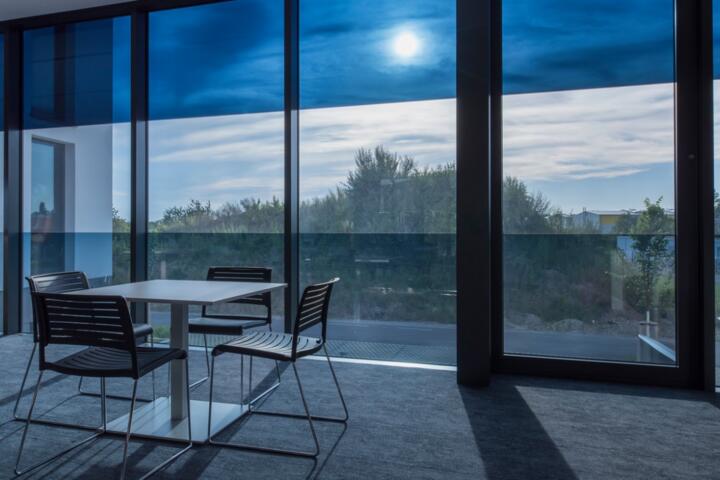
Older generations of EC glass had a distinct blue tint. Newer iterations, such as those from Halio, have achieved a much more neutral gray/black aesthetic that doesn't distort the interior color palette or the view of the sky.
Author’s Insight
In my years consulting on sustainable facades, I've seen the shift from "luxury gimmick" to "essential infrastructure." The biggest takeaway for me is that smart glass isn't about the glass—it's about the data. When you can track exactly how much heat is hitting your building in real-time, you can manage your entire facility with surgical precision. My advice: don't buy the glass based on the price per square foot; buy it based on the software's ability to integrate with your specific HVAC system. The real magic happens when the window and the air conditioner finally start talking to each other.
Summary
Smart glass technology represents the most significant leap in window engineering since the invention of the double-pane unit. By moving from static barriers to active filters, buildings can finally maximize glass usage without the associated energy penalties. To implement this successfully, focus on zonal control, prioritize high-exposure facades, and ensure your system is integrated into a wider IoT ecosystem. The goal is to create an environment that optimizes itself for the humans inside, making manual adjustments a thing of the past.