Seismic Safety Basics
Earthquakes don't kill people; collapsing buildings do. In seismic engineering, the goal is not to create a structure that ignores movement, but one that harmonizes with it. When a fault line slips, the ground moves in three dimensions, subjecting a house to lateral forces (shear) and vertical acceleration that can exceed gravity.
Modern engineering utilizes "ductility"—the ability of a material to deform without breaking. For instance, in the 2011 Tohoku earthquake, buildings equipped with advanced damping systems remained standing while surrounding unreinforced structures failed. Real-world data from USGS (United States Geological Survey) shows that a properly retrofitted home is up to 70% less likely to suffer catastrophic failure during a magnitude 7.0 event.
Practically, this means moving away from brittle materials like unreinforced masonry (URM). A house must act like a cohesive unit, where the roof, walls, and foundation are tied together by a continuous load path, ensuring that energy is transferred safely back into the ground.
Critical Failure Points
The Danger of Soft Story Designs
A "soft story" occurs when a ground floor has large openings, such as garage doors or retail windows, creating a structural weakness. During an earthquake, these floors lack the lateral stiffness of the upper levels, leading to a "pancake" collapse. Following the 1994 Northridge earthquake, thousands of apartments were deemed uninhabitable precisely because of this design flaw.
Inadequate Foundation Anchoring
Many older homes sit loosely on their foundations. Without anchor bolts (specifically Simpson Strong-Tie HDU hold-downs or similar), the house can slide off the concrete slab. This severing of utility lines—gas, water, and electricity—is a primary cause of post-earthquake fires, which often do more damage than the shaking itself.
Unreinforced Masonry Hazards
Bricks and cinder blocks are excellent for compression but fail instantly under tension. Without vertical steel rebar and high-strength grout, masonry walls crumble under lateral loads. In high-risk zones like California or Japan, unreinforced masonry is now largely prohibited for new residential builds due to its 90% failure rate in major tremors.
Non-Structural Component Neglect
It is a common mistake to focus only on the skeleton of the house. Heavy water heaters, large HVAC units, and heavy furniture that aren't strapped to wall studs become lethal projectiles. Statistics from FEMA indicate that non-structural damage accounts for over 50% of the financial losses in moderate seismic events.
Poor Soil Quality and Liquefaction
Even a perfectly built house will fail if the ground beneath it turns to liquid. Liquefaction happens in water-saturated, sandy soils. During shaking, the soil loses its strength, causing the foundation to sink or tilt. Ignoring a geotechnical report from firms like Geocon or Stantec before breaking ground is a high-stakes gamble.
Strategic Safety Gear
Advanced Base Isolation Systems
Base isolation acts like a shock absorber for your home. By placing the structure on lead-rubber bearings or friction pendulum sliders (such as those manufactured by Earthquake Protection Systems), the building is decoupled from the ground motion. While the earth shakes violently, the house moves only inches at a slower frequency.
Implementation involves a specialized "moat" around the foundation to allow for lateral displacement. While this adds 10-15% to construction costs, the ROI is massive: the building remains operational immediately after a disaster, avoiding the "red-tag" status that renders homes useless.
High-Ductility Steel Reinforcement
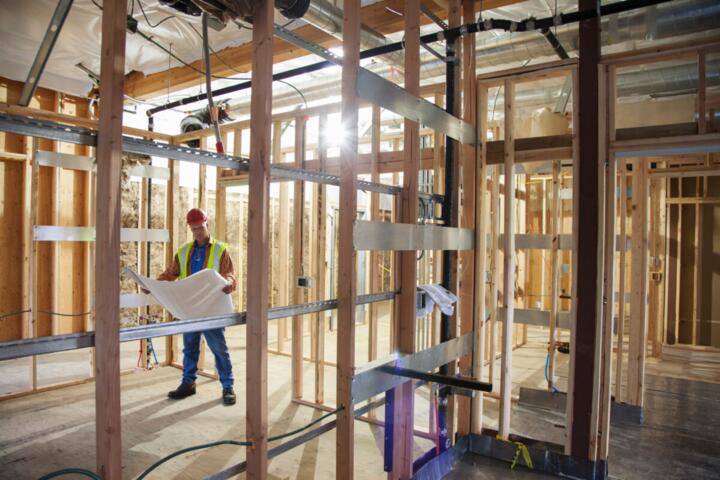
The use of Grade 60 steel rebar in concrete foundations and shear walls is non-negotiable. Steel provides the "give" that concrete lacks. In timber-frame construction, "shear walls" are created by nailing structural plywood (OSB) in specific patterns to the framing. This creates a rigid box that resists the "racking" forces of an earthquake.
For high-end residential projects, Buckling Restrained Braces (BRBs) are becoming popular. These components absorb energy through a steel core that yields during a quake, protecting the primary frame from damage. This technology, used by firms like CoreBrace, is the gold standard for high-performance safety.
Flexible Utility and Gas Shut-offs
To prevent the secondary disaster of fire, every seismic-safe home must have an ASCE 25-06 certified seismic gas shut-off valve (SGSV). These valves automatically cut the gas supply when they sense a magnitude 5.0 or greater tremor. Brands like Little Giant or Koso are industry leaders in this niche.
Furthermore, plumbing should utilize flexible PEX piping rather than rigid copper or PVC where possible. PEX can bend and stretch significantly before rupturing, ensuring that the home’s water and fire suppression systems remain intact when they are needed most.
Lightweight Roofing Strategies
Mass is the enemy of seismic safety. The heavier the roof, the greater the inertial force pulling the top of the house sideways. Replacing heavy clay tiles with lightweight composite materials (like those from DaVinci Roofscapes) or standing-seam metal roofing drastically reduces the seismic load on the walls.
A metal roof can weigh as little as 1.5 lbs per square foot, compared to 10 lbs for concrete tile. This weight reduction allows for thinner, less intrusive support columns without compromising the structural safety of the living spaces below.
Geotechnical Soil Stabilization
If your site is prone to liquefaction, soil improvement is the first step. Techniques include "compaction grouting," where a cement-like mixture is injected into the soil to densify it, or "deep soil mixing." Utilizing helical piers from Chance Foundation Solutions can also transfer the building's weight to deeper, more stable strata below the liquefiable layer.
Real-World Safety Cases
Case Study 1: The San Francisco Modern Villa
A luxury residence was built on a steep slope in a high-risk zone. The developer utilized a "hybrid" system: a rigid concrete "podium" foundation anchored with 30-foot deep piers, topped with a base-isolated timber frame. During a localized 4.5 magnitude event, sensors showed the house experienced zero structural stress, while neighboring properties suffered cracked drywall and foundation shifting.
Case Study 2: The Christchurch Retrofit
Following the devastating New Zealand quakes, a commercial-to-residential conversion used FRP (Fiber Reinforced Polymer) wraps on its columns. This carbon-fiber technology increased the load-bearing capacity of the old concrete by 400%. When subsequent aftershocks hit, the building showed no signs of spalling or cracking, saving the owner an estimated $1.2 million in repair costs.
Resilience Checklist
| System / Component | Standard Requirement | Optimal Upgrade |
|---|---|---|
| Foundation Anchors | 5/8" bolts every 6 feet | High-strength epoxy anchors + hold-downs |
| Shear Walls | Standard 7/16" OSB | Double-sided 15/32" structural plywood |
| Gas Supply | Manual shut-off | Automated ASCE 25 certified seismic valve |
| Roofing Material | Concrete/Clay tile | Standing-seam metal or composite shingles |
| Windows | Standard tempered glass | Laminated safety glass (impact resistant) |
| Water Heater | Single strap | Heavy-duty double-strap kit (top and bottom) |
Common Mistakes Guide
The most frequent error is the "DIY seismic upgrade." Homeowners often install foundation bolts but fail to add the necessary plate washers. Without a 3-inch square plate washer, the bolt can pull right through the wood sill plate during a jolt. Always refer to APA (The Engineered Wood Association) guidelines for correct fastening patterns.
Another mistake is assuming a "new" house is earthquake-proof. Building codes are "minimums" designed to prevent collapse, not to prevent damage. To achieve "functional recovery" (being able to live in the house immediately after), you must build beyond the code. Neglecting to consult a structural engineer for open-concept floor plans is a recipe for catastrophic shear failure.
FAQ
Is base isolation too expensive for a regular home?
Traditionally, yes. However, new residential-scale systems have brought costs down. While it still represents a significant upfront investment (often $30,000–$60,000), it can be offset by lower insurance premiums from providers like California Residential Mitigation Program (CRMP).
How do I know if my soil is safe?
A "Standard Penetration Test" (SPT) performed by a geotechnical engineer is the only way to be sure. They will analyze the "N-values" of your soil to determine its density and risk for liquefaction or lateral spreading.
Can I retrofit an existing brick house?
Yes, but it is complex. It usually involves "shotcreting" (spraying concrete) onto the interior of the walls over a grid of rebar, or using FRP wraps. It is expensive but necessary for historical preservation in seismic zones.
What is the most seismic-resistant house shape?
Simple, symmetrical shapes like squares or rectangles perform best. L-shaped or U-shaped houses create "re-entrant corners" where stress concentrates. If you have an irregular shape, "seismic joints" must be used to allow different parts of the house to move independently.
Do earthquake insurance policies cover structural upgrades?
Generally, no. Insurance covers the loss after the fact. However, many policies offer discounts if you can provide a "Certificate of Completion" for a seismic retrofit that meets FEMA P-1100 standards.
Author’s Insight
In my two decades of structural consulting, I’ve seen that the most resilient homes aren't necessarily the "strongest"—they are the smartest. I always tell my clients that spending $5,000 on high-end connectors and proper shear wall nailing during construction saves $500,000 in reconstruction later. Don't just build to the minimum code; build for the "Big One." My top advice: focus on the continuous load path—ensure there is a solid connection from the roof rafter all the way down to the bedrock.
Summary
Building for seismic resilience requires a holistic approach that integrates geotechnical data, advanced material science, and precision engineering. By focusing on base isolation, ductile reinforcement, and automated safety systems, you move beyond mere survival to true structural endurance. Start by hiring a specialized structural engineer and investing in high-quality hardware. Taking these steps today ensures that your home remains a sanctuary, rather than a liability, when the earth eventually moves.