Beyond the Grid
An off-grid system is not just a collection of panels; it is a closed-loop ecosystem where every watt must be accounted for. Unlike grid-tied systems that use the utility as a buffer, off-grid setups rely entirely on localized storage and generation. This requires a shift from "average consumption" thinking to "peak demand" engineering.
In practice, this means accounting for the high inrush current of a well pump or the efficiency loss of a DC-to-AC conversion. For instance, a 2000W microwave might pull 2500W from the battery bank once inverter inefficiency is factored in. Recent industry data suggests that 40% of off-grid failures stem from underestimating winter production drops, which can be as high as 80% compared to summer peaks in northern latitudes.
Critical Failures
The most expensive mistake in off-grid design is "component mismatching," where high-end solar panels are paired with low-quality lead-acid batteries or undersized charge controllers. This creates bottlenecks that shorten the lifespan of the entire system. When a battery bank is consistently undercharged, it suffers from sulfation, leading to a permanent loss of capacity within months.
Another major pain point is the "Ghost Load" phenomenon. Many designers forget that inverters, internet routers, and smart home hubs consume power 24/7. A small 50W continuous draw adds up to 1.2kWh daily. In a system designed for 5kWh of daily use, that is a 24% error margin that can lead to total system shutdowns during a string of cloudy days.
Precision Engineering
Designing for success requires moving away from "rules of thumb" toward precise calculations and high-quality hardware. Focus on the following technical pillars to ensure your investment lasts for the intended 15 to 25 years.
Right-Sizing Battery Banks
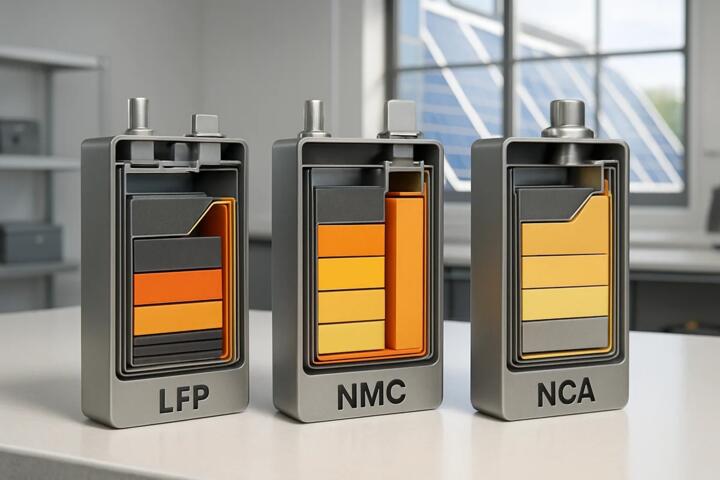
Modern off-grid systems should prioritize Lithium Iron Phosphate (LiFePO4) over traditional Lead-Acid. While Lead-Acid (AGM/GEL) is cheaper upfront, it only offers a 50% usable depth of discharge (DoD) and roughly 500-1,000 cycles. In contrast, brands like Pylontech or EG4 provide 80-90% DoD and over 6,000 cycles. On a cost-per-cycle basis, LiFePO4 is approximately 70% cheaper over its lifetime.
Accounting for Temperature
Batteries are chemical engines. In extreme cold, LiFePO4 cannot be charged below 0°C without permanent damage unless the units have integrated heating blankets (like the Victron Smart Lithium series). Conversely, Lead-Acid batteries lose 50% of their effective capacity when temperatures drop to -20°C. Always house your storage in a climate-controlled or insulated enclosure.
The Inverter Surge Factor
Your inverter must be sized for the "start-up" load, not just the "running" load. A 1HP well pump might run at 1000W but require 4000W for a split second to start. If using a high-frequency inverter, it might trip. Low-frequency inverters with large copper transformers, such as those from Schneider Electric or Outback Power, handle these surges much better than lightweight alternatives.
Voltage Drop Management
Running 12V or 24V over long distances is a recipe for energy loss. A 3% voltage drop on a 12V system is only 0.36V, but it can prevent a battery from reaching full charge. Professional installers prefer 48V architectures. This higher voltage reduces the required amperage, allowing for thinner, less expensive wiring while significantly improving overall system efficiency.
Diversifying Energy Sources
Relying solely on solar is a gamble. A robust system incorporates "AC Coupling" or a dedicated generator port. Using a high-quality inverter-generator like the Honda EU series or a dedicated standby unit like the Kohler Power Systems off-grid series ensures that your batteries stay healthy during "Solar Droughts"—extended periods of heavy cloud cover or snow.
Intelligent Monitoring
You cannot manage what you cannot measure. Tools like the Victron Cerbo GX or the Solar-Log monitoring system provide real-time data on state-of-charge (SoC), solar yield, and consumption. Without a shunt-based battery monitor, you are essentially "guessing" your fuel gauge based on voltage, which is notoriously inaccurate for lithium chemistries.
Real-World Scenarios
A residential project in Montana initially installed 4kW of solar with 20kWh of Lead-Acid storage. The system failed every December. After upgrading to 30kWh of LiFePO4 and adding a 5kW backup generator with an automated start (ASW), the owner saw a 100% reduction in power outages. The lithium batteries maintained a steady voltage, allowing the well pump to function even at 20% SoC.
In another case, a remote cabin in Oregon used a cheap 12V "all-in-one" inverter. The unit's idle consumption was 65W. Over a month, this wasted nearly 47kWh of energy—more than the cabin’s lighting and refrigeration combined. Replacing it with a high-efficiency Victron MultiPlus reduced idle draw to 11W, effectively "saving" 38kWh per month without adding a single solar panel.
System Comparison
| Feature | Lead-Acid (AGM/Gel) | Lithium (LiFePO4) |
|---|---|---|
| Capacity | 50% usable depth | 90% (Double energy) |
| Cycle Life | 500 - 1,200 | 4,000+ (10x longer) |
| Charging | Slow (8-12 hours) | Fast (1-2 hours) |
| Maintenance | Moderate / Heavy | Zero / Lightweight |
Common Mistakes
Avoid the temptation to buy "budget" solar panels from unverified marketplaces. Stick to Tier 1 manufacturers like Jinko Solar, Canadian Solar, or Mission Solar. These panels have tighter power tolerances and better low-light performance. Additionally, never mix panels of different voltages or wattages on the same MPPT controller, as the weakest panel will bottleneck the entire string's output.
Ensure your racking system is rated for local wind and snow loads. A common mistake is using generic aluminum rails in high-wind zones, leading to structural failure. Use specialized hardware from IronRidge or Unirac to protect your modules. Lastly, always install a lightning arrestor (like the Midnite Solar SPD) to protect your expensive electronics from induced surges during storms.
FAQ
How much battery storage do I actually need?
Ideally, you should aim for 2 to 3 days of "autonomy." This means if your daily consumption is 10kWh, you need 20kWh to 30kWh of usable storage to bridge gaps in solar production without triggering a generator.
Can I run my AC off-grid?
Yes, but it requires a "Soft Start" device to reduce inrush current. Modern mini-split heat pumps (like Mitsubishi Hyper-Heat) are significantly more efficient than traditional central air units for off-grid applications.
What is the most common hardware failure?
Cheap charge controllers are the primary failure point. High-quality MPPT (Maximum Power Point Tracking) controllers from brands like Morningstar or Victron can harvest up to 30% more energy than budget PWM controllers.
Is a backup generator mandatory?
For primary residences, yes. It acts as an "insurance policy" for your batteries. Running a battery to 0% significantly reduces its lifespan; a generator prevents this during unexpected weather events.
Do solar panels work in the snow?
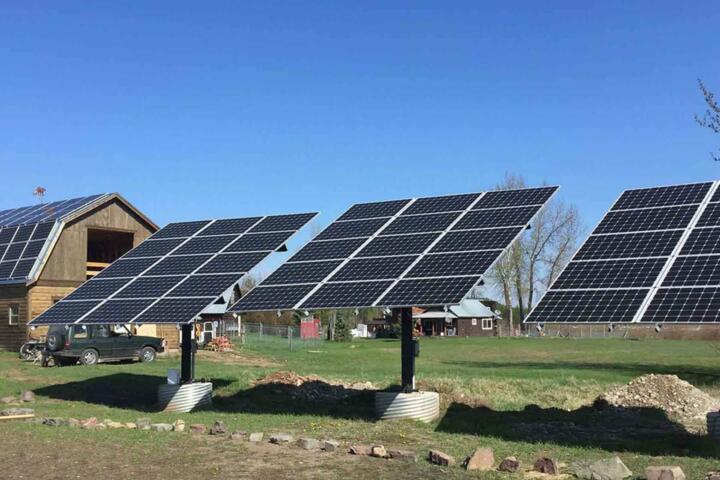
Panels still produce power through light snow, but heavy accumulation stops production. Mounting panels at a steeper angle (60 degrees for winter) helps snow slide off and optimizes for the lower winter sun position.
Author’s Insight
In my fifteen years of designing remote power systems, the most successful projects are those that prioritize "efficiency over capacity." I always tell clients that every dollar spent on a more efficient refrigerator or LED lighting saves five dollars in solar panels and batteries. My personal preference is always a 48V DC bus because it offers the most room for future expansion. Don't cut corners on your over-current protection; high-quality breakers and fuses are the only things standing between a minor fault and a catastrophic fire.
Summary
Building a reliable off-grid system requires a disciplined approach to energy math and high-quality hardware selection. By avoiding undersized wiring, choosing LiFePO4 chemistry, and accounting for surge loads, you create a system that provides true energy independence. Start by performing a rigorous load audit and always build in a 25% safety margin for your storage capacity. The goal is not just to have power, but to have a system that operates so seamlessly you forget you are off the grid.