Rural Social Dynamics
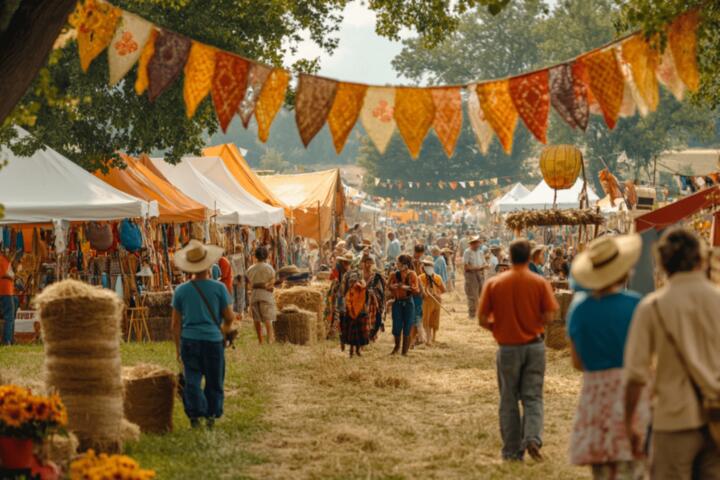
Agricultural fairs and weekly markets are more than trade points; they are the "public squares" of the 21st century. In regions where digital connectivity may be patchy or social isolation is high, these events facilitate face-to-face trust building that no algorithm can replicate. For a local producer, a single Saturday market can represent 40% of their weekly revenue, making these venues critical for survival.
Consider the Royal Highland Show in Scotland or the State Fair of Texas. These aren't just festivals; they are massive economic engines. In the UK alone, agricultural shows contribute over £3.5 billion to the economy annually. On a smaller scale, a farmers' market with just 20 vendors can circulate $15,000 in a single morning directly back into the local zip code, bypassing international retail chains.
The Anatomy of Trust
Trust in rural communities is built through consistency. When a buyer sees the same honey producer every week for three years, a "social contract" is formed. This proximity allows for immediate feedback loops that large supermarkets lack. If a batch of apples is sour, the farmer hears about it by 9:00 AM, allowing for real-time quality adjustment and personalized customer service.
Knowledge Exchange Hubs
Fairs act as informal classrooms. It is common to see third-generation cattle ranchers discussing regenerative grazing techniques with new-age organic farmers. This cross-pollination of ideas drives innovation. Organizations like the National Young Farmers Coalition often use these spaces to recruit members and share data on soil health, effectively turning a social event into a professional seminar.
Common Strategy Failures
The most frequent mistake is treating a rural market like a sterile retail transaction. Vendors often fail because they don't engage in the "social" aspect of the social life. A silent vendor sitting behind a pile of produce will almost always be outperformed by one who tells the story of their harvest. Static displays without interaction lead to low retention and missed opportunities for long-term brand loyalty.
Another pain point is poor logistical planning regarding seasonality. Many organizers attempt to replicate urban "pop-up" models in rural settings without accounting for harvest cycles or local weather patterns. This mismatch results in low vendor turnout and disappointed attendees. Forgetting the "hidden" audience—the local business-to-business (B2B) connections—is a major oversight that limits the growth of the local ecosystem.
Growth Strategies
To succeed, participants must leverage "Experience Economy" principles. Don't just sell a product; sell the process. Live demonstrations—whether it’s sheep shearing, sourdough prepping, or blacksmithing—increase "dwell time" (the amount of time a visitor stays at a stall). Statistics show that for every 10 minutes of increased dwell time, spending per head increases by roughly 15%.
Digital integration is no longer optional, even in the most remote fields. Using mobile payment solutions like Square or Zettle is mandatory, as 70% of modern fair-goers carry minimal cash. Furthermore, capturing emails for a Mailchimp newsletter allows vendors to maintain the relationship after the fair ends, turning a one-time visitor into a year-round subscriber.
Optimizing Stall Layouts
Use the "Veblen Effect" by highlighting premium, limited-run items at eye level while keeping staples accessible. Your stall should have a "hot zone" where the most visually striking items live. Effective lighting (even battery-powered LEDs for evening markets) can increase visibility by 30% compared to shadowed stalls.
Leveraging Local SEO
Organizers should use Google Business Profiles and Eventbrite to ensure the market appears in "near me" searches. Local hashtags on Instagram are vital. A market that doesn't exist on a digital map is invisible to the lucrative "agri-tourist" demographic, which spends significantly more than local residents on artisanal goods.
Building B2B Partnerships
Fairs are prime hunting grounds for wholesale deals. A local restaurant owner visiting a market might be looking for a consistent microgreen supplier. Vendors should have "Wholesale Kits" ready under the counter. Networking apps like LinkedIn should be used post-event to solidify these professional connections made over a wooden crate of tomatoes.
Sustainability as a Brand
Rural consumers are increasingly sensitive to waste. Implementing a "return and reuse" program for jars or bags can boost loyalty. Data suggests that brands using sustainable packaging see a 12% higher repeat-purchase rate in community settings compared to those using single-use plastics.
Curating the Atmosphere
The "hidden" social life thrives on atmosphere. Organizers should prioritize acoustic live music and communal seating. When people sit down to eat, they stay longer and interact more. This "social glue" turns a chore (grocery shopping) into a destination event, increasing the overall economic viability of the venue.
Real-World Success Cases
The Frome Independent (Somerset, UK): This market transformed a struggling high street by reclaiming it for local makers once a month. By curating a mix of "lifestyle" products and essential food, they attracted 10,000+ visitors per event. The result was a 25% increase in permanent shop footfall on market days, proving that temporary events boost permanent infrastructure.
Union Square Greenmarket (New York/Regional impact): While located in a city, this market functions as a lifeline for rural farmers within a 200-mile radius. One mid-sized orchard reported that 80% of their annual revenue comes from this single location. By utilizing a "hub and spoke" logistics model, they’ve kept over 100 regional farms from going into foreclosure over the last decade.
Strategic Implementation
| Task | Tool/Service | Frequency | Expected Result |
|---|---|---|---|
| Inventory Management | Shopify POS | Real-time | Accurate stock, no overselling |
| Audience Engagement | Instagram Stories | Daily (Live at event) | 20% higher footfall via FOMO |
| Customer Retention | Klaviyo / Email | Bi-weekly | Repeat orders during off-season |
| Site Analytics | Placer.ai | Post-event | Understanding visitor heatmaps |
Mistakes to Avoid
The "Ghost Stall" error is fatal. This happens when a vendor leaves their booth unattended or looks bored on their phone. In a social market, you are the brand. If you aren't present, the customer feels devalued. Always have a "booth buddy" so the stall is never empty during bathroom or lunch breaks.
Price ambiguity is another silent killer. In a crowded fair, people are often too shy to ask for a price. If your items aren't clearly marked, you will lose up to 40% of potential impulse buys. Use clear, handwritten chalkboards to maintain a rustic aesthetic while providing professional transparency.
FAQ
How do I find the best local markets to join?
Use databases like the USDA Farmers Market Directory or National Market Traders Federation (NMTF). Check social media tags for the town to see which events have the highest engagement and "vibe" that matches your product.
Is it worth traveling for larger state fairs?
Only if your "Average Transaction Value" (ATV) covers the stall fee, fuel, and lodging. Calculate your break-even point before committing. For high-ticket items like handmade furniture, large fairs are excellent; for low-margin produce, stay local.
How can I accept payments in areas with no Wi-Fi?
Most modern POS systems like Square have an "Offline Mode." They store the encrypted transaction and process it once you regain connectivity. Always test this feature before heading into a "dead zone."
What is the most effective way to attract kids/families?
Interactive elements are key. A "scavenger hunt" across different stalls or a simple petting zoo area increases the time families spend at the event, which directly correlates with higher food and beverage sales.
How do I handle leftover perishable stock?
Partner with apps like Too Good To Go or local food banks. This reduces waste and can provide a tax write-off or marketing "goodwill" story for your social media channels.
Author’s Insight
Having spent over a decade analyzing rural economic trends, I’ve seen that the most successful "hidden" social networks are those that treat technology as a servant, not a master. My advice: don't over-automate. People come to these markets to escape the coldness of e-commerce. Use your smartphone to take the payment, but use your voice to tell the story of the soil. The most valuable currency in a rural market isn't the dollar; it's the handshake.
Summary
The social life of rural communities is anchored in the physical gathering of people at fairs and markets. Success in these environments requires a blend of traditional relationship-building and modern logistical tools. Focus on dwell time, clear pricing, and digital follow-ups to turn a weekend event into a sustainable business pillar. Start by auditing your current stall presence and ensuring you are selling an experience, not just a commodity.