Monetizing Sunlight
Solar leasing is a partnership where an energy developer rents a portion of your property to install and operate a utility-scale photovoltaic system. Unlike residential panels, these installations feed power directly into the high-voltage grid or local substations. It transforms passive acreage into an industrial-grade utility site without requiring the landowner to manage any technical hardware.
In practice, a developer might approach a landowner in a state like North Carolina or Texas, where solar irradiance is high and the regulatory environment is favorable. For example, a 100-acre parcel might host a 20-megawatt (MW) array, generating enough electricity to power roughly 3,000 homes. These projects are capital-intensive for the developer, often costing upwards of $1 million per megawatt to build, which is why they seek long-term site control.
Recent statistics from the Solar Energy Industries Association (SEIA) indicate that utility-scale solar capacity has grown by over 25% annually in recent years. In prime regions, lease rates can range from $800 to over $2,500 per acre per year, depending on proximity to infrastructure. This creates a predictable cash flow that far exceeds the average $150 to $250 per acre yield seen in traditional corn or soybean farming.
Proximity to Grid Infrastructure
The single most important factor in land valuation is the distance to a three-phase power line or a utility substation. Developers look for "interconnection" feasibility; if your land is more than two miles from a viable tie-in point, the cost of running lines can kill the project's profitability. Modern GIS tools like LandGate or Terabase are often used by experts to calculate these distances before a contract is even drafted.
Evaluating Soil and Topography
Solar developers prefer flat or gently sloping land (less than 5-10 degrees) with minimal wetlands or rocky outcrops. If your land is a "Brownfield" site—formerly used for industrial purposes—you might qualify for additional federal incentives under the Inflation Reduction Act (IRA), which provides a 10% tax credit adder for projects in energy communities. This increases the developer's margin and, by extension, your leverage in rent negotiations.
Zoning and Local Permitting
Success depends heavily on the "Conditional Use Permit" (CUP) process. Local counties often have specific setbacks (how far the panels must be from the road) and screening requirements (trees or fences). Understanding your local Board of Supervisors' stance on renewable energy is critical; if the county has a moratorium on solar, your land is effectively worth zero for energy purposes regardless of its sun exposure.
The Lease Option Period
Before construction begins, you will enter an "Option Period," typically lasting 2 to 5 years. During this time, the developer pays a smaller fee (e.g., $20 to $100 per acre) to "tie up" the land while they conduct environmental studies and secure grid access. You cannot sell the land or lease it to others for competing purposes during this window, so the price of this exclusivity must be negotiated carefully.
Decommissioning and Restoration
A major concern for landowners is what happens in year 40 when the panels stop working. A robust agreement must include a "Decommissioning Bond"—a form of insurance or cash escrow that ensures the developer has the funds to remove the steel racks and concrete footings. This protects the landowner from being left with a "graveyard" of glass and aluminum if the energy company goes bankrupt.
Landowner Blind Spots
Many landowners move too quickly when presented with a "Letter of Intent" (LOI), failing to realize that these initial documents often set the ceiling for future negotiations. One common mistake is neglecting the "tax escalation" clause. When land is converted from agricultural use to a solar farm, the property tax assessment can skyrocket because it is now classified as industrial or commercial property.
Another critical failure is not accounting for "severance damages." If a developer only leases the middle 40 acres of a 100-acre plot, they might render the remaining 60 acres inaccessible for farming equipment. Without a clause that compensates for the lost utility of the remaining land, the owner effectively loses value on more acreage than they are being paid for. This often leads to long-term resentment and lower total returns.
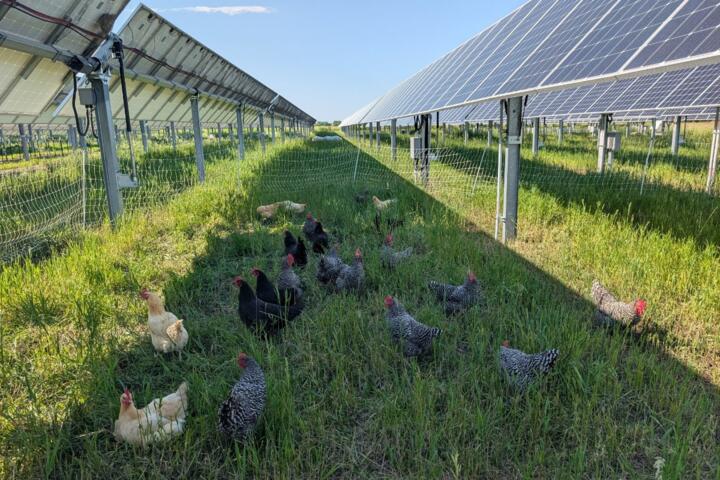
Real-world disputes frequently arise over vegetation management. If the contract doesn't specify who is responsible for mowing the grass under the panels or managing invasive species, the land can become a fire hazard or a nuisance to neighbors. Developers often try to offload this cost, but an experienced landowner will insist the developer handles all maintenance, often using "solar grazing" (sheep) as a cost-effective and eco-friendly solution.
Optimizing the Deal
To maximize revenue, you must treat your land like a limited commodity. Start by obtaining a professional land assessment. Use platforms like PVWatts to estimate the solar potential of your specific coordinates. If your land has a high "capacity factor," you can command the higher end of the local rent spectrum. Never accept the first offer; developers usually have a 15-20% buffer in their initial pricing models.
Ensure the lease includes an "Annual Escalator." This is typically a 2% to 3% increase in rent every year to account for inflation. Without this, the $1,000 per acre you receive today will have significantly less purchasing power in 30 years. On a 100-acre lease, a 2% annual escalator results in hundreds of thousands of dollars in additional cumulative income over the life of the project compared to a flat-rate lease.
Specific services like Paces or LevelTen Energy provide data on corporate power purchase agreements (PPAs). If a major tech company like Amazon or Google is building a data center nearby, the local grid capacity will be in high demand. This increases the "locational marginal price" of electricity, making your land more valuable to a developer who wants to sell power into that high-demand pocket. Mentioning local industrial growth during negotiations signals that you understand the market dynamics.
Contractual Protection Layers
Insist on a "Most Favored Nations" clause if the developer is leasing from multiple neighbors. This ensures that if your neighbor negotiates a higher rate later, your rent automatically bumps up to match. Additionally, define the "leased premises" with GPS coordinates after the ALTA survey is complete to ensure you aren't paying taxes on land the developer isn't actually using.
Tax Implications and 1031s
Consult with a CPA about the "Qualified Business Income" (QBI) deduction. Solar lease income is often treated as passive rental income, but depending on how the entity is structured, you might be able to offset some gains. If you decide to sell the land with the lease attached, the "cap rate" will determine the sale price. A guaranteed 30-year income stream makes the land highly attractive to institutional investors looking for 1031 exchange opportunities.
Strategic Success Cases
A family-owned farm in Ohio recently transitioned 150 acres of low-yield corn soil to a solar developer. Initially, they were offered $900 per acre. After hiring a consultant to prove the land's proximity to a 138kV transmission line, they successfully negotiated the rate to $1,250 per acre with a 2.5% annual escalator. The result was a guaranteed $187,500 in year one, compared to the previous average net profit of $45,000 from farming, while retaining the right to graze sheep under the panels for additional income.
In another case, a landowner in Georgia faced a project cancellation because the local substation was at capacity. Instead of giving up, they partnered with a smaller developer for a "Community Solar" project. This smaller-scale installation (5 MW) didn't require massive grid upgrades and allowed local residents to subscribe to the power. While the per-acre rent was slightly lower ($1,000), the project was approved and built 18 months faster than a utility-scale site would have been.
Solar Lease Checklist
| Feature | Standard Offer | Expert Recommendation |
|---|---|---|
| Annual Rent Escalator | 0% - 1% | 2% - 3% (linked to CPI) |
| Option Period Duration | 5 - 7 years | 2 - 3 years (with extension fees) |
| Property Tax Responsibility | Landowner pays all | Developer pays all "Increases" due to solar |
| Decommissioning Security | "Trust us" approach | Cash bond or Letter of Credit in Year 10 |
| Liability Insurance | Basic coverage | $5M - $10M umbrella naming owner as additional insured |
Avoiding Costly Pitfalls
One of the most dangerous mistakes is signing a "perpetual easement" rather than a lease. An easement can permanently cloud your title and make it impossible to use the land for anything else even after the solar farm is gone. Always ensure the agreement is a lease with a clear termination date. Furthermore, be wary of "confidentiality clauses" that prevent you from talking to your neighbors; developers use these to keep rent prices artificially low across a geographic area.
Don't forget the "Hunt and Fish" rights. If you enjoy using the non-developed parts of your land for recreation, you must explicitly reserve those rights in the lease. A standard developer contract might fence off the entire property "for safety," effectively locking you out of your own woods or ponds. Specify that the "Project Area" is fenced, but the "Remaining Lands" remain under your full control for personal use.
FAQ
Will solar panels ruin my soil?
Generally, no. In fact, many experts believe "resting" the soil for 30 years without pesticides and heavy tilling allows the microbiome to recover. Most developers use "driven piers" which are steel posts pounded into the ground, minimizing the need for concrete and permanent soil displacement.
Can I still farm the land?
You can engage in "Agrivoltaics." This involves planting shade-tolerant crops like leafy greens or berries between rows, or more commonly, "Solar Grazing" where sheep manage the grass. Cattle are usually avoided because they are large enough to damage the tracking motors and wiring.
What if the solar company goes bust?
The lease is an asset. If the original company fails, the project is usually sold to another energy firm or an infrastructure fund (like BlackRock or NextEra). The lease "runs with the land," meaning the new owner is legally obligated to honor the terms and pay the rent.
How does this affect my heirs?
A solar lease provides a "liquid" income stream that is much easier to divide among heirs than physical farmland. However, it does limit the future use of the land for the duration of the lease, so it is a decision that affects the next two generations.
Will panels lower my property value?
For the land under the panels, value increases based on the income it generates (the "income approach" to valuation). For surrounding residential land, the impact is debated, but many studies show that well-screened solar farms have a negligible impact compared to industrial factories or housing developments.
Author's Insight
In my years observing the intersection of real estate and renewable energy, the most successful landowners are those who treat the developer as a tenant, not a savior. I have seen owners double their initial offers simply by showing they understand the "Interconnection Queue" status of their local utility. My best advice is to never sign an LOI without an attorney who specializes in energy law—not just general real estate—because the "Force Majeure" and "Subordination" clauses in these 80-page documents can haunt you for decades if mismanaged.
Summary
Leasing land for solar energy is a sophisticated financial move that replaces the uncertainty of weather and commodity prices with a stable, long-term corporate credit. Success requires a deep dive into grid proximity, a firm grasp of local zoning, and a refusal to settle for boilerplate contract terms. By prioritizing decommissioning bonds, tax protection, and annual rent escalators, you can ensure your acreage remains a legacy asset. Take the first step by mapping your property’s distance to the nearest substation and consulting with an energy-focused legal professional.